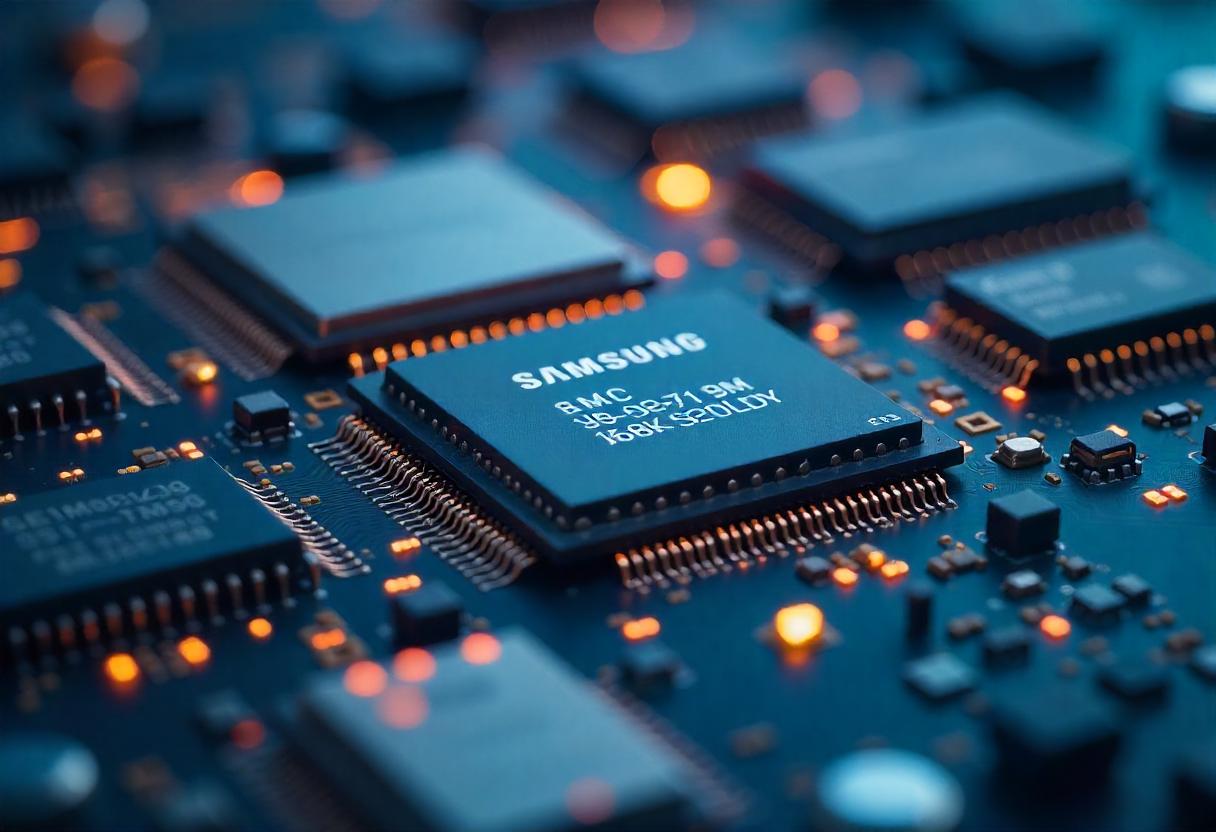
For over three decades, Samsung Electronics stood as the undisputed leader of the memory chip industry. The company’s technology powered everything from smartphones to data centers and brought billions in profits to South Korea’s most valuable brand. Today, however, Samsung is facing its toughest challenge yet, with its dominance slipping in both memory chips and advanced logic chip manufacturing.
Samsung’s share price has tumbled, with investors wiping $122 billion off its market value in late 2024. The reason is simple but severe: Samsung is losing ground to its main rivals, SK Hynix in the AI memory space and Taiwan’s TSMC in chip manufacturing. The suddenness of this reversal has left many in the industry asking—how did Samsung fall so far, so fast?
From Market Leader to Market Laggard
Samsung’s entry into the chip market began in the 1980s, focusing on DRAM and later NAND flash memory. By the 1990s and 2000s, Samsung had become the world’s top memory maker, riding technology booms and raking in record profits. In the 2010s, it expanded further, aiming to compete with TSMC and Intel by making not only its own chips but also manufacturing chips for other companies—a business known as foundry services.
Initially, Samsung’s aggressive investment and quick adoption of new technologies appeared to pay off. It was first to mass produce chips with advanced technologies such as EUV lithography and Gate-All-Around (GAA) transistor architecture. Big customers like Apple and Qualcomm briefly relied on Samsung’s foundries for important products, and Samsung’s own chip designs powered many of its devices.
However, by 2024, problems were emerging. Samsung’s latest advanced chipmaking process, 3nm GAA, suffered from poor yields, meaning only a small percentage of chips produced were usable. This created doubts about Samsung’s ability to deliver at scale. Major clients, including Apple, Nvidia, AMD, and Qualcomm, switched back to TSMC after experiencing performance and reliability issues. Samsung’s foundry market share fell below 8%, while TSMC extended its dominance, controlling about 67% of the global foundry business.
The lack of trust from customers is another major hurdle. Unlike TSMC, which only manufactures chips and does not compete with its clients, Samsung both manufactures and designs chips for its own products. This vertical structure raised concerns among potential clients about the safety of their intellectual property, pushing them toward pure-play foundries like TSMC.
SK Hynix and the AI Memory Revolution
While Samsung’s foundry business was losing momentum, its traditional strength—memory chips—also came under threat. In early 2025, SK Hynix overtook Samsung as the world’s top DRAM supplier by revenue, a first in modern memory industry history. SK Hynix’s success was driven by rapid growth in artificial intelligence, which created soaring demand for High Bandwidth Memory (HBM)—a highly specialized type of DRAM used in AI servers and data centers.
SK Hynix had invested in HBM technology early, securing deals with leading AI chipmakers like Nvidia. By 2025, SK Hynix held around 70% of the HBM market, while Samsung lagged behind due to slower time-to-market and production delays. Samsung’s own memory division faced losses, in part because it had overproduced commodity chips during a period of falling demand and missed the HBM surge that fueled SK Hynix’s rise.
The chip industry is well known for its boom-and-bust cycles, but Samsung’s latest downturn is also about strategic mistakes and missed opportunities. While Samsung remains highly competitive in standard memory products, it failed to pivot quickly to the new, high-value segments driving the next wave of technology.
Despite heavy investments in new factories and technology, Samsung now finds itself fighting to regain lost ground on two fronts: advanced foundry manufacturing and AI-driven memory. Whether Samsung can rebuild trust, solve technical issues, and catch up in key growth areas will determine if it remains a global chip powerhouse—or if this is the beginning of a lasting decline.