Intel Launches Panther Lake Chips on Advanced 18A Process
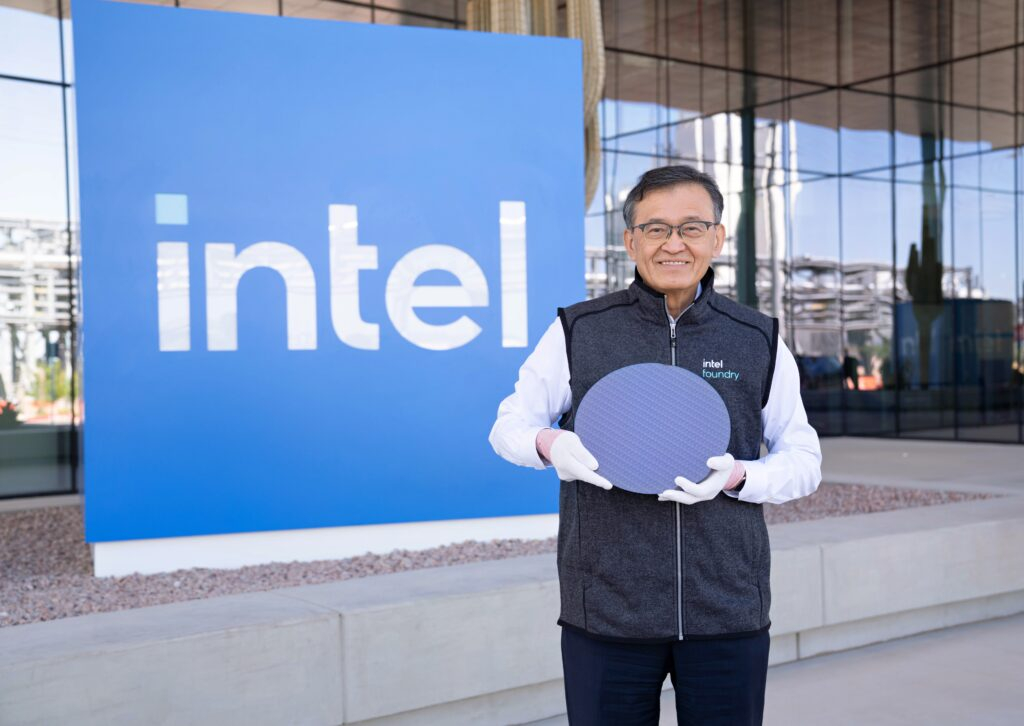
Intel has revealed detailed information about its next-generation client processor, the Intel Core Ultra series 3, codenamed Panther Lake. This series will be the first to use Intel’s advanced 18A semiconductor manufacturing process, marking a significant technological milestone. The 18A process is the most cutting-edge chip manufacturing technology developed and produced in the United States to date. Production is set to begin at Intel’s new Fab 52 facility in Chandler, Arizona later this year, with broad market availability expected in January 2026. This shift emphasizes Intel’s strategic focus on bolstering domestic semiconductor manufacturing capabilities as global supply chain resilience becomes increasingly critical.
The Panther Lake processors employ a scalable, multi-chiplet system-on-chip architecture designed to power a wide range of consumer and commercial artificial intelligence (AI) PCs, gaming devices, and edge computing solutions. Intel has equipped these processors with up to 16 new performance and efficiency cores. This configuration yields more than a 50% increase in CPU performance over the previous generation. Graphics performance also receives a significant boost through a new Intel Arc GPU featuring up to 12 Xe cores, delivering over 50% faster performance. Additionally, Panther Lake integrates a balanced XPU design for AI acceleration capable of up to 180 trillion operations per second (TOPS), supporting advanced AI computations beyond traditional PC uses, including robotics.
Intel’s new lineup includes three varieties of Panther Lake chips. These range from an 8-core model to 16-core configurations that differ in GPU core count and PCIe lane allocations. The chips support up to 96GB of memory and use the latest LPDDR5X memory standard, offering very high data transfer speeds. The combination of increased core counts, improved graphics, and AI processing power positions Panther Lake as a major leap in computing technology for laptops and other mobile devices.
Alongside Panther Lake, Intel previewed its forthcoming Xeon 6+ server processor, code-named Clearwater Forest. This chip is also built on the Intel 18A node and is optimized for hyperscale data centers, cloud service providers, and telecommunications companies. The processor features up to 288 efficient cores with a 17% uplift in instructions per cycle compared to its predecessor. Its gains in density, throughput, and power efficiency aim to reduce energy consumption while scaling workload capabilities in modern data centers. The Xeon 6+ is scheduled for launch in the first half of 2026.
The Intel 18A manufacturing process represents a pioneering 2-nanometer-class technology developed in the U.S. It delivers up to 15% better performance per watt and 30% improved chip density compared to the previous Intel 35 process. Two major innovations on this node are the RibbonFET transistor architecture, Intel’s first new design in over a decade that enables greater efficiency and switching speed, and PowerVia, a backside power delivery system that improves energy flow and signal integrity.
Intel also uses Foveros, an advanced 3D chip stacking packaging technology, which enables the integration of multiple chiplets into highly flexible and scalable system-on-chip designs. This level of integration supports significant performance improvements and greater design flexibility for future Intel processors.
Fab 52, Intel’s new manufacturing facility in Chandler, complements Intel’s existing research and production infrastructure in the United States. The plant forms part of the company’s $100 billion investment to expand domestic operations and secure leadership in semiconductor innovation and supply. This new fab is considered the most advanced chip manufacturing site in the U.S. and is central to Intel’s plans for future technology generations spanning client and server products. The Panther Lake and Clearwater Forest processors produced here highlight Intel’s commitment to enhancing U.S. manufacturing capabilities amid a changing global technology landscape.