Jack Dorsey Launches Bluetooth Messaging App called Bitchat
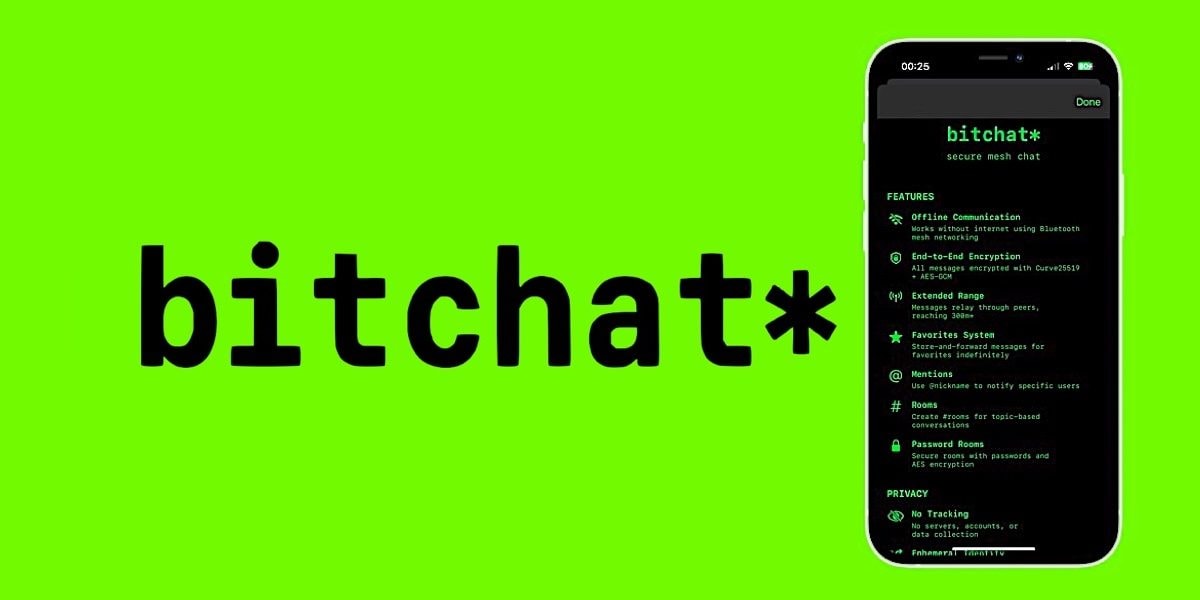
Jack Dorsey, the well-known co-founder of Twitter and founder of Bluesky, has launched a new messaging application named Bitchat, which aims to revolutionize the way individuals communicate in the absence of traditional internet infrastructure. The app, developed over a weekend and introduced to the public via Apple’s TestFlight, has already generated significant interest, quickly reaching the maximum limit of 10,000 beta testers. Bitchat stands out in a crowded field of messaging applications by providing decentralized, peer-to-peer encrypted communication exclusively over Bluetooth mesh networks, eliminating the need for centralized servers, phone numbers, email registrations, or even an active internet connection.
Bitchat leverages Bluetooth Low Energy (BLE) mesh networking technology to enable direct device-to-device communication within physical proximity. The mesh network automatically discovers peers and relays messages across clusters of devices, effectively extending the functional range beyond standard Bluetooth limits. While traditional Bluetooth connections typically have a range of about 100 meters, Bitchat’s relay system allows messages to be passed between devices, reportedly increasing the range to over 300 meters. This “store and forward” architecture ensures that messages can be delivered to users who are temporarily offline, with messages cached locally and delivered once users reconnect to the mesh.
The design of Bitchat addresses several longstanding concerns in digital communication. Notably, it eliminates reliance on centralized infrastructure, which often presents privacy, surveillance, and censorship risks. By removing the need for user accounts, phone numbers, and emails, Bitchat enhances user anonymity and reduces the attack surface for potential data breaches. Messages are encrypted using advanced cryptographic protocols, including Curve25519 and AES-GCM for private messages, and Argon2id with AES-256-GCM for channel-specific communication. Digital signatures and authentication are managed through Ed25519, adding another layer of security.
To further safeguard privacy, Bitchat includes features such as dummy messaging and timing obfuscation, which serve to disguise traffic patterns and enhance anonymity. Additionally, a “Panic Mode” is implemented, allowing users to quickly erase all stored data on their device through a simple triple-tap of the app logo, offering an extra measure of protection in high-risk scenarios.
Bitchat’s operational model is not entirely novel; similar Bluetooth-based messaging platforms have been used in the past during times of civil unrest and in locations where internet access is restricted or monitored. The most prominent example is Bridgefy, which was widely used by protestors in Hong Kong. However, Bitchat distinguishes itself by offering greater range, enhanced cryptographic measures, and more comprehensive privacy controls. The application also incorporates IRC-style commands and adaptive power management modes, catering to both technical and non-technical users.
The current version of Bitchat is available for iOS, iPadOS, and macOS via TestFlight, with an unofficial Android version accessible through GitHub. Plans are underway to add support for Wi-Fi Direct, which would further improve speed and range. The app’s combination of decentralized architecture, robust security features, and resilience to infrastructure failures positions it as a potential tool for both emergency communications and everyday privacy-focused use.